
Landfill methane
Left in landfills, spent coffee grounds don't just disappear — they decompose anaerobically and release methane, a greenhouse gas up to 80 times more potent than CO₂.
The world drinks more than 2 billion cups of coffee every day. Behind each one is a growing stream of spent coffee grounds — discarded by hotels, cafes, restaurants, offices, and homes, and most of it is never recovered or reused.
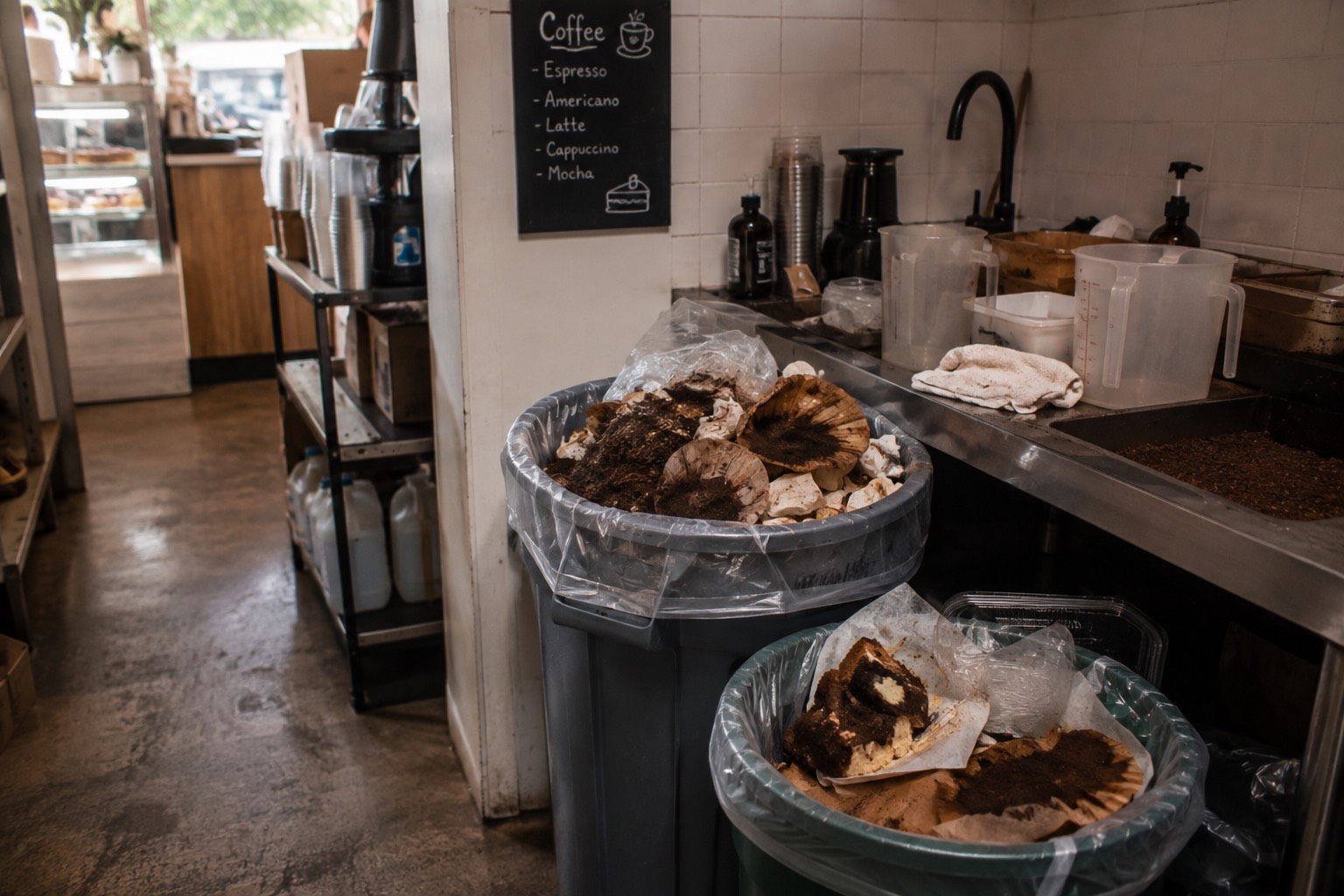
The material itself isn't toxic — the harm comes from how it is usually thrown away, and how much of it there is.
Left in landfills, spent coffee grounds don't just disappear — they decompose anaerobically and release methane, a greenhouse gas up to 80 times more potent than CO₂.
Cafes, hotels, and households generate huge quantities every day — globally, millions of tonnes of organic waste that must be collected, transported, and buried.
Growing, processing, and shipping coffee carries a real carbon and water footprint. Discarding the grounds after a single brew wastes all the energy that went into the bean.
In large, concentrated dumps — unlike garden compost — grounds can acidify soil and leach into water systems, affecting local ecosystems.
KUNS intercepts that waste stream and transforms it into a leather-alternative material — turning an overlooked climate problem into lasting value.